A Goliath Named Neuroblastoma
But now we had finally seen our Goliath: Neuroblastoma. And what a giant it was.
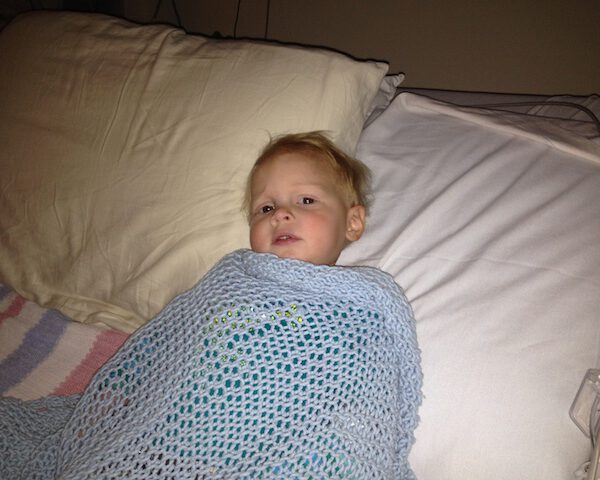
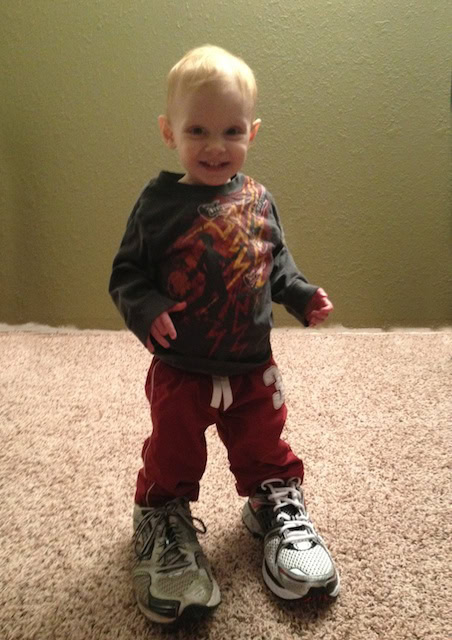
For months, it was as if a phantom monster was attacking Jude. We couldn’t see it, but the evidence of its presence was with us always: Jude’s sunken eyes, the bloated, distended belly that made our two-year-old look pregnant, the limp, thin strands of hair, the constant vomiting and diarrhea. Something was obviously wrong. Most doctors seemed to think it was a strange food allergy, some protein that Jude was unable to digest, or some adverse reaction to cellulose that caused his intestinal transit to occur far too rapidly. We had tried all sorts of various diets: gluten free, dairy free, lactose free; and gone through all manner of food and protein supplements. (All of them taste horribly. Trust me.)
But now we had finally seen our Goliath: Neuroblastoma. And what a giant it was. Neuroblastoma is a childhood cancer that grows from immature cells in the nervous system. In Jude’s case, there was a single cell in the adrenal gland that did not mature correctly. This cell began to replicate itself out of control, forming a tumor. While relatively rare (700 children are diagnosed with neuroblastoma every year), it accounts for 15% of all cancer deaths. The survival statistics are pretty grim. Only 30-40% of children diagnosed have a 5 year survival rate, and this is up from only a 10% survival rate a decade ago.
Those first few days in the hospital were slow and tedious. The doctors wanted to do an exploratory surgery as soon as possible to biopsy the tumor, and if at all feasible, remove a portion of it. The problem going forward was that Jude was so weak and dehydrated by this time that the doctors thought surgery would be too risky. So, we spent much of the next week watching bag after bag of fluids being pumped into his body in an attempt to build up enough strength to handle the surgery. It was during this time that so many of our friends (and complete strangers) reached out to us in an incredible outpouring of generosity by way of prayers, encouraging notes, food, and gifts for Jude. We were so blown away by how much love we felt from our church family and our friends. Many times, we simply had to turn off our phones in order to sleep because so many messages and notes were coming in. We received messages of encouragement and prayer from thousands of people, from every continent.
But now we had finally seen our Goliath: Neuroblastoma. And what a giant it was. Neuroblastoma is a childhood cancer that grows from immature cells in the nervous system. In Jude’s case, there was a single cell in the adrenal gland that did not mature correctly. This cell began to replicate itself out of control, forming a tumor. While relatively rare (700 children are diagnosed with neuroblastoma every year), it accounts for 15% of all cancer deaths. The survival statistics are pretty grim. Only 30-40% of children diagnosed have a 5 year survival rate, and this is up from only a 10% survival rate a decade ago.
Those first few days in the hospital were slow and tedious. The doctors wanted to do an exploratory surgery as soon as possible to biopsy the tumor, and if at all feasible, remove a portion of it. The problem going forward was that Jude was so weak and dehydrated by this time that the doctors thought surgery would be too risky. So, we spent much of the next week watching bag after bag of fluids being pumped into his body in an attempt to build up enough strength to handle the surgery. It was during this time that so many of our friends (and complete strangers) reached out to us in an incredible outpouring of generosity by way of prayers, encouraging notes, food, and gifts for Jude. We were so blown away by how much love we felt from our church family and our friends. Many times, we simply had to turn off our phones in order to sleep because so many messages and notes were coming in. We received messages of encouragement and prayer from thousands of people, from every continent.
As a two-year-old, he was aware enough to know that he had left the safety and comfort of the home he knew and loved, and had been brought to a strange, sterile place. He was confined to an uncomfortable bed and had mysterious, hurting tubes coming out of his arms and legs. Strangers would enter the room at all hours of the day and night and inflict pain as they drew blood or gave him shots; the parents he thought had loved him would hold him down and repeat over and over, “It’s okay, it will only hurt for a moment.” I can’t imagine the fear or distrust he must have had of the place. I hope he never remembers any of it.In the corner of the room was a small bay window with a bench seat that converted into a single sleeper bed at night. I made this little area into my own private bedroom, closet, office, and kitchen. I spent many hours, most of those first few days, sitting there, quietly talking to God. Praying, pleading, arguing, begging. I didn’t understand why this was happening to our family. When your child is diagnosed with cancer, your life is quickly reorganized into a new perspective. Nothing else matters; all the possessions you have obtained, the knowledge and skills you have developed, everything else in your life is quickly reduced to trivialities. It’s all worthless, and you’ll trade all of it for the promise of health for your child.
I felt a bit like the Biblical figure of Job. But perhaps that’s giving me too much credit. I wanted to react like Job. As the Old Testament legend goes, when the protective covering of God is lifted from Job’s life, he loses everything. His health, his possessions, his wife, and every one of his children are taken from him, and yet he does not curse God. Despite the fact that he is suffering the cruelest unrelenting agony, he does not accuse God of injustice.
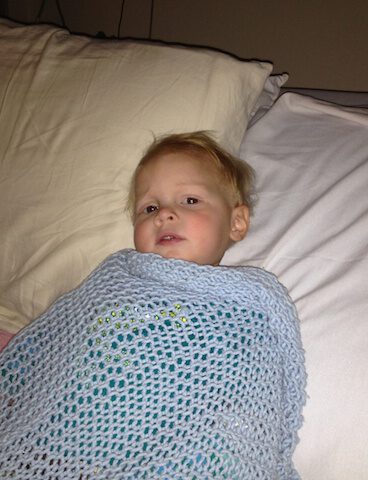
After a few days of stabilizing Jude’s body and getting him IV nourishment, we were given the news that surgery was scheduled for Monday, August 6th. The doctors were very clear from the beginning; this was just an exploratory surgery. Despite all the advances of modern radiology and the millions of dollars of technology hospitals have at their disposal, they couldn’t be absolutely sure what they were dealing with until they were physically able to open Jude up and look around. The goal of this surgery was to examine the tumor directly, and to biopsy a tiny portion of the tumor, so that we could get a complete pathology on this particular cancer. If the opportunity presented itself, there was an option of attempting to resect (remove) the tumor. We were cautioned time and again however, the possibility of doing a complete resection was rare. Often, neuroblastoma tumors grow and wrap around other organs and blood vessels, making their removal extremely difficult and risky. Still, we prayed many times every day that the surgeons would be able to remove the tumor, that they would get that damn thing out of my son.
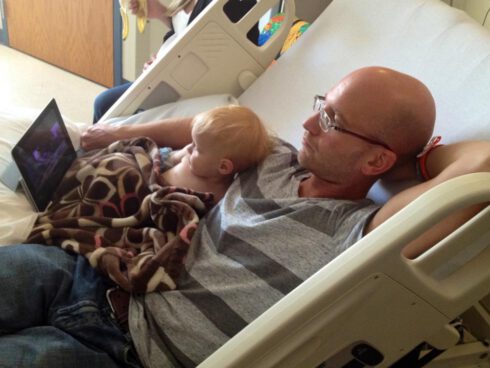
Standing in the surgical prep room with my 8 ½ months pregnant wife, holding the boy I had loved unconditionally since the moment I learned of his existence, was one of the most unbearable moments of my life. I could not believe that life had brought me to this point. In a few moments, I would be presented with a clipboard, on which were a few sheets of paper I would sign authorizing the hospital and a team of strangers to take my child and cut him wide open. I had not been given any assurances that my son would be fine, or that this was just a routine procedure. It was anything but routine, for all of us involved.
And at last the moment came, when a surgical nurse took from my wife and I our whimpering son, not yet unconscious and full of fear. Hearing his sobs as he was carried away was too much for either of us, and delivered fresh heavy tears to our own eyes, already sunken and bloodshot.
Read part three of this series of posts: “The Tumor Was Not Resectable.”
“The Tumor Was Not Resectable.”
There's no comfort in the waiting room; just nervous pacers bracing for bad news.
Read Now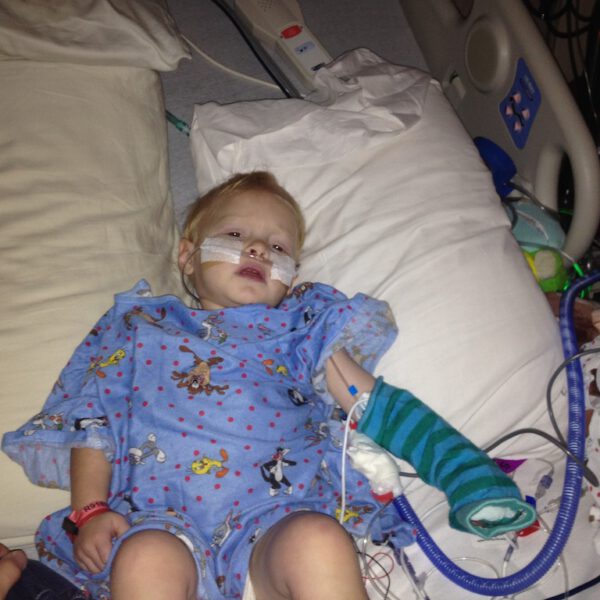
The Day You Find Out Your Child Has Cancer
I didn't want to face this thing. I didn't know if I could face this thing.
Read Now