When Jordon White Died
For a moment, I am fifteen again, sitting at my grandparents’ dinner table on a hot July Sunday afternoon, unaware that the phone is about to ring and divide my life into everything that came before and everything that came after.
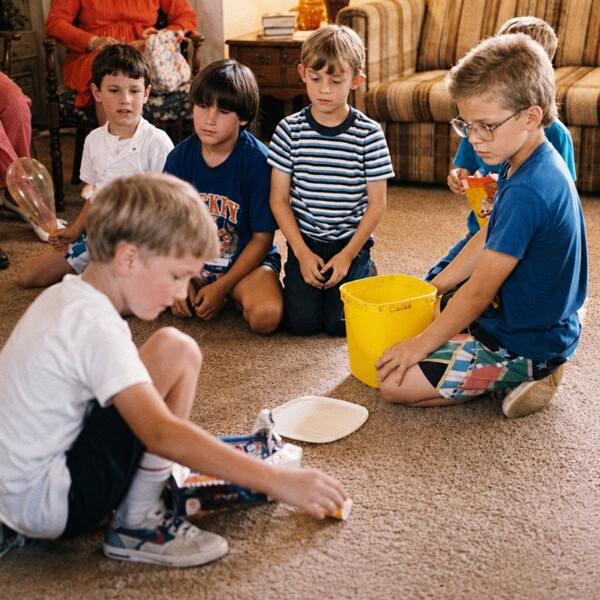
Today marks thirty years since I lost my best friend in a tragic swimming accident. Jordon and I were both just fifteen years old.
Thirty years is a strange amount of time. It is long enough for an entire adult life to have unfolded, yet some memories from those few days remain sharper than things that happened last week. I am now three times the age Jordon was when he died. I have grown older, gotten married, raised children, built a career, and lived through decades of ordinary days he never had the chance to experience.
Grief changes over time, but it does not disappear. The rawness fades. The memories become less constant. Life grows around the loss. But certain dates, like today, have a way of collapsing the distance between then and now. For a moment, I am fifteen again, sitting at my grandparents’ dinner table on a hot July Sunday afternoon, unaware that the phone is about to ring and divide my life into everything that came before and everything that came after.
I have told parts of this story before, but on the thirtieth anniversary of Jordon’s death, I wanted to write down what I remember. Some details may have shifted with time. Others remain painfully clear. This is not the whole story of who Jordon was, nor could it be. It is the story of losing him, as I remember it now thirty years later.
* * *
I was sitting at the table for a family dinner at my grandparents’ house in Savannah when the phone rang for my dad. I’ve never asked who it was or how they knew we were there. This was before cell phones. I assume they called around until they found us, just like our parents sometimes had to do to locate us back then. Regardless, somehow the awful news found us.
I didn’t really know what was going on. A group of friends had driven to a lake to swim one hot Sunday afternoon. Something happened. Something bad. My best and oldest friend in the world, Jordon, had been underwater for several minutes.
We drove first towards the lake in Cameron, then on to Children’s Mercy Hospital. I remember my dad driving ninety miles an hour. I remember the road stretching and blurring and the sense that speed might still be enough to outrun what was coming.
A group of parents sat in the waiting room through the night and into the next day. I think I remember being the only kid there, though that may be a misremembering. I don’t know where Jordon’s brothers were. I didn’t cry. I don’t think I even spoke. I was in shock, trapped in a bewildered stupor. I avoided eye contact with his parents, Dave and Robin. Dave was steady, praying loud and firm, holding on to what had to be a combination of faith and hope and desperation. Robin was crying. I had no idea what to say to them, so I sat with my head down, silent and useless.
At some point, someone brought in a large sack of White Castle hamburgers for everyone. I tried to eat one but immediately felt nauseous. I’ve never eaten one since. It’s strange, the small irrational artifacts grief leaves behind.
The next evening my mom drove me back to St. Joe and dropped me off at Jonathan Truxal’s house. I stayed the night there. My longtime friend Lindsay was staying with his sister Hannah as well. Around 2 o’clock in the morning, neither of us able to sleep, we found each other in the hallway. We talked quietly, sitting on the stairs in the dark, and without saying it directly we both understood that Jordon wasn’t coming back. That was the first time I cried. We cried together, arms wrapped around each other, trying to hold together something that had already fallen apart.
Education was never something I took very seriously, and as a result I was taking summer school for Algebra II. I had already missed a day, and I risked failing the class if I didn’t attend. It was difficult for me to focus in math class on my best days. Doing so while my best friend lay dying in a hospital bed was impossible. Mr. Weeks was kind as I sat in class, drifting somewhere outside my conscious. He asked if I had a picture of Jordon with me. I pulled a dog-eared school photo out of my pocket. On the back, Jordon had written a joke about me and the girl I was crushing on. Mr. Weeks asked a few gentle questions, more to show care than curiosity. He told me I could leave the classroom anytime I needed. He could see it building and had the decency not to force a fifteen-year-old boy to break in front of his classmates.
I knew in my gut that Jordon, though still on life support, was already gone. That certainty settled in before anyone said the words.
Candy Crawford, a custodian at the high school who knew Jordon and I outside of school, was sweeping the hallway when we crossed paths. She stopped, wrapped her arms around me, and said, “Caleb, I’m so sorry.” The floodgates in the corners of my eyes burst. I knew it then. I knew it was over. The inevitable had arrived. The next phase of the story had begun. My mom picked me up after class and confirmed what I already understood. I cried the entire way home.
I don’t remember anything between that moment and the funeral. It’s a blank space in my history. The funeral itself was strange and heavy, filled with the taut, barely contained emotion of teenagers who didn’t yet know how to hold grief. Tom Dillingham did the best he could presiding over a service like that. I know it was hard on him too.
I struggled to speak or even look at Dave and Robin for years afterward. It’s a reaction I felt horrible about, but I couldn’t summon words that would offer any real comfort. As I’ve gotten older, I’ve realized that was never my job, and never something they expected from me. Still, it is a heaviness I have carried.
I’ve wondered many times whether things would have been different if I had been at the lake. Would I have stayed back with Jordon? Would something small have changed the outcome? Could I have been the butterfly flapping its wings, altering the course of history? There is no way to know, and it is usually unhealthy to live inside those questions. Maybe I would have been there and nothing would have changed at all. I don’t know if being there would have given me answers, or only more things to carry. My tendency to ruminate does not bend toward the healthy. Some doors are better left closed, even when we ache to know what is on the other side.
The Day You Find Out Your Child Has Cancer
I didn't want to face this thing. I didn't know if I could face this thing.
Read Now
The Last Supper
Right now, in this room, none of that was of interest or concern. He could eat alone. In silence. In solitude.
Read Now